
Monsoon Construction Tips for Lahore: How to Protect Your Site, Materials and Structure
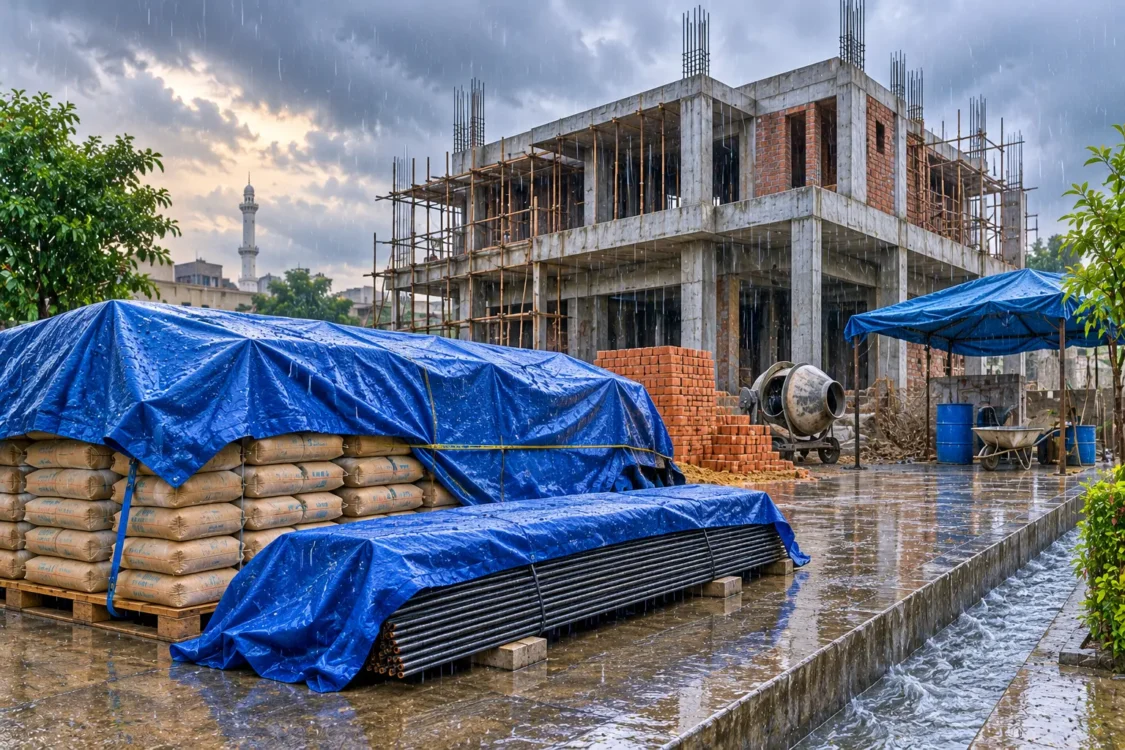

Lahore’s monsoon brings welcome relief from the summer heat, but it also brings heavy downpours, waterlogging, humidity and sudden storms that can cause serious problems on a construction site. Wet cement, flooded excavations, washed-away soil, weakened formwork and slippery scaffolding are common issues for builders who are not prepared.
This guide explains how to plan and protect your project during the rainy season. It covers site preparation, materials, concrete work, excavation, safety, waterproofing and what to inspect once the rain has passed.
Key takeaways
- Prepare drainage and covered storage before the monsoon begins.
- Protect cement, steel, sand and bricks from moisture and washout.
- Avoid or carefully protect concrete pouring during heavy rain, and keep curing under control.
- Secure excavations, scaffolding and electrical connections for safety.
- Inspect the whole site after each major storm.
Why the monsoon is risky for construction
- Water can wash away soil from foundations and slopes
- Wet cement hardens and loses strength
- Rainwater can dilute fresh concrete or mortar and weaken it
- Steel left in water and mud can rust and lose bond quality
- Slippery surfaces increase the chance of accidents
- Electrical equipment in wet conditions raises the risk of shock
- Delays increase costs and disrupt schedules
Before the monsoon: preparation checklist
1. Plan the schedule around the weather
Discuss the project timeline with your builder before the rainy season. Where possible, complete excavation and foundation work, or at least reach a safe, protected stage, before the heaviest rain. Schedule indoor work, plastering and finishing for days when the building is roofed and sealed.
2. Build proper drainage
Create channels, slopes and sumps so that water flows away from the foundation and does not collect in the site. Keep drains clear of debris and plan where pumped water will go. Check that your site drainage does not cause problems for neighbours or block public drains.
3. Prepare covered storage
Arrange a dry, raised storage area for cement and other moisture-sensitive materials. Keep cement bags on platforms or pallets off the ground, away from walls, covered with waterproof sheets and stored in a first-in, first-out order. Do not stack more than the recommended height.
4. Secure the site
Check boundary barriers, scaffolding, formwork and temporary structures. Tie down loose materials, tarpaulins and signs. Make sure that stored items cannot fall or be carried away by wind.
Protecting materials
- Cement: keep dry; discard or test any that has hardened into lumps
- Steel reinforcement: store off the ground and covered; clean heavy mud or loose rust before use
- Sand and aggregate: keep on firm ground with drainage; excess moisture affects mix design and water content
- Bricks and blocks: stack neatly and cover; avoid placing saturated units without adjustment
- Timber and formwork: keep off wet ground to prevent swelling and warping
- Paint, putty and finishing materials: store indoors in a dry place
Concrete work during the rainy season
Concrete quality depends on correct water content, proper placement and curing. Rain can add uncontrolled water to a fresh mix, wash cement from the surface and spoil finishes.
- Check the weather forecast before planning a pour and have tarpaulins or covers ready
- Do not pour concrete during heavy rain; if rain begins unexpectedly, protect the surface and follow your engineer’s instructions
- Adjust the mix water for the moisture already present in sand and aggregate
- Use covers to protect freshly placed concrete from direct rain, while ensuring it can still be cured properly
- Keep formwork secure; saturated ground can shift supports
- Maintain proper curing even in humid weather, as concrete still needs adequate moisture and time to gain strength
Your structural engineer or site supervisor should decide when to postpone or modify work.
Excavation and foundation safety
- Keep excavations drained to prevent waterlogging and soil collapse
- Protect the edges with barriers and avoid heavy loads near the trench
- Do not leave deep excavations open longer than necessary during rain
- Inspect trench walls and shoring regularly for movement or cracks
- Do not place foundations on soft, waterlogged soil; follow engineering advice
Worker and site safety
Wet conditions increase the risk of slips, falls and electric shock. Provide non-slip footwear, helmets, gloves and rain gear. Keep walkways and ladders clear of mud and use proper scaffolding with secure bases. Switch off and isolate electrical equipment in wet areas, use properly insulated cables and ensure circuit protection devices are fitted. Stop work during lightning and strong winds.
Waterproofing your structure
The monsoon is also the perfect test of your waterproofing. Roofs, terraces, bathrooms, external walls, balconies and joints should be properly sealed and sloped to drain. Ensure rainwater outlets are clear and sized correctly. Water that stays on a roof will find the weakest point and cause leaks and dampness inside the building.
- Complete roof waterproofing before heavy rain
- Test terraces by ponding water, if appropriate, before finishing
- Seal gaps around windows, doors and service openings
- Check gutters, spouts and drains are fixed and unobstructed
After heavy rain: inspection checklist
- Inspect excavations, trenches and slopes for erosion or cracks
- Check formwork and props for movement
- Look at newly cast concrete for washout, cracks or surface damage
- Examine stored materials for moisture or washout
- Test electrical connections and equipment before use
- Check roofs, ceilings and walls for leaks or damp patches
- Clear drains and remove standing water
- Document any damage with photos and discuss repairs with your builder
Special notes for different types of projects
New construction
Focus on foundation drainage, protected storage and careful scheduling of concrete work. Cover the top of incomplete columns and walls to prevent water from entering and weakening joints.
Renovation
Old houses often reveal hidden leakage during monsoon. Use this period to identify damp walls and roof problems, and plan repairs once conditions allow.
Finishing stage
Humidity can affect paint, polish, adhesives and wood. Allow extra drying time, ventilate rooms and avoid applying finishes to damp surfaces.
How Bin Sadiq Builders plans for the rains
As a Lahore-based builder working across Punjab, we plan schedules with seasonal weather in mind, protect materials and keep drainage and safety measures in place on our sites. If your project is running through the monsoon, ask your contractor to explain the plan clearly.
Frequently asked questions
Can concrete be poured in the rain?
It is best avoided during heavy rain because water can weaken the mix and surface. If rain is light or unexpected, protective measures and engineering guidance are necessary.
How should I store cement during the monsoon?
Keep it in a dry, covered area on raised platforms away from walls, with waterproof sheets and good ventilation. Use older stock first and do not use hardened lumps.
Should construction stop during the monsoon?
Not necessarily. With good planning, many activities can continue safely, but heavy rain days may require pauses for safety and quality.
How can I check if my roof is waterproof?
Inspect after heavy rain for stains, damp or dripping, and ensure outlets drain freely. A professional can test waterproofing before finishing work covers it.
Final thoughts
The monsoon does not have to ruin your construction schedule or quality. With drainage in place, materials protected, concrete work managed carefully and regular inspections, you can keep the project safe and on track. Plan ahead, communicate with your builder and treat every heavy storm as a chance to learn how well the building and site are protected.
Planning to build, renovate or finish a property in Lahore? Bin Sadiq Builders offers residential, commercial, infrastructure, renovation, interior and turnkey construction across Lahore and Punjab. Call or WhatsApp us on 0300-4906422, email buildersbinsadiq@gmail.com, or visit our office at 7 km, Dubai Town Stop, Sher Shah Road, near Raiwind Road, Lahore (Monday to Saturday, 9am to 8pm). Built on trust. Built to last.
